
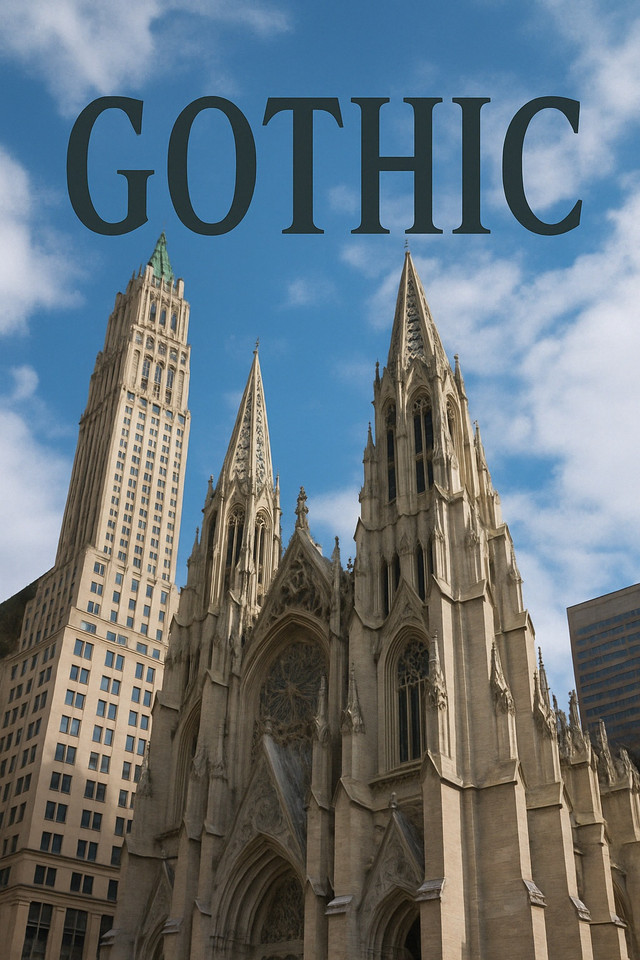
Exploring the Transformation of Gothic Architecture from Past to Present
Posted by Elodie Allington - Architect on Apr 20, 2025
Exploring the Transformation of Gothic Architecture from Past to Present
Gothic architecture, with its soaring spires, intricate stonework, and ethereal stained glass, has left an indelible mark on the world of design. Originating in 12th-century France, the Gothic style evolved across Europe and beyond, influencing not just cathedrals and churches but modern architecture, pop culture, and urban planning. In this post, we’ll explore the transformation of Gothic architecture from its early beginnings to its revival and reinterpretation in the modern world.

The Birth of Gothic: 12th Century France
The emergence of Gothic architecture in 12th-century France marks one of the most revolutionary shifts in European architectural history. To understand its significance, one must first appreciate the context in which it arose—a time of burgeoning urban centers, increasing ecclesiastical wealth, and a philosophical shift toward light as a symbol of divine truth.
From Romanesque Roots to a New Vision
Prior to Gothic architecture, the dominant style in Europe was Romanesque. Characterized by thick stone walls, small windows, barrel vaults, and heavy, fortress-like appearances, Romanesque churches felt enclosed and dim. While impressive in mass, they lacked the verticality and luminosity that would come to define the Gothic style.
By the early 1100s, advances in engineering and a growing theological emphasis on light and transcendence spurred a radical rethink of church design. This change was led by one of the most influential figures of the time: Abbot Suger of Saint-Denis.
Abbot Suger and the Basilica of Saint-Denis
Suger, the abbot of the royal abbey of Saint-Denis just outside Paris, was a visionary administrator, theologian, and patron of the arts. Between 1135 and 1144, he oversaw the renovation of the abbey church, seeking to glorify God and honor French royalty through architecture.
Suger was heavily influenced by the writings of Pseudo-Dionysius the Areopagite, a Christian mystic who argued that divine light was a physical manifestation of the presence of God. Suger translated this