

Lindsey Adelman Agnes Chandelier
Posted by Rebecca Townsend - Chandelier Aficionado on Jan 25, 2026
The Lindsey Adelman Agnes Chandelier is a widely recognised modern lighting design, known for its branching arms, exposed bulb configuration, and sculptural industrial aesthetic. Often referenced in contemporary interior design, the Agnes chandelier has influenced a broad category of minimalist and mid-century-inspired chandelier styles. Its adaptable form makes it a popular choice for dining rooms, living spaces, and open-plan interiors where statement lighting plays a central design role.
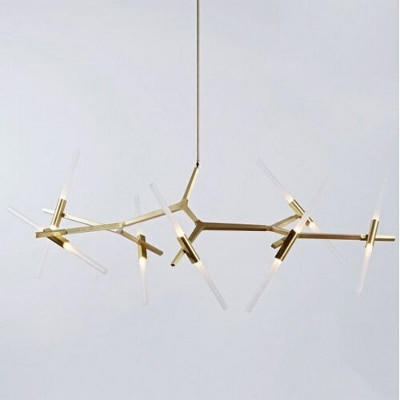
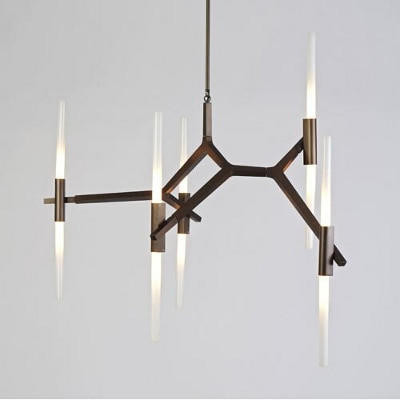
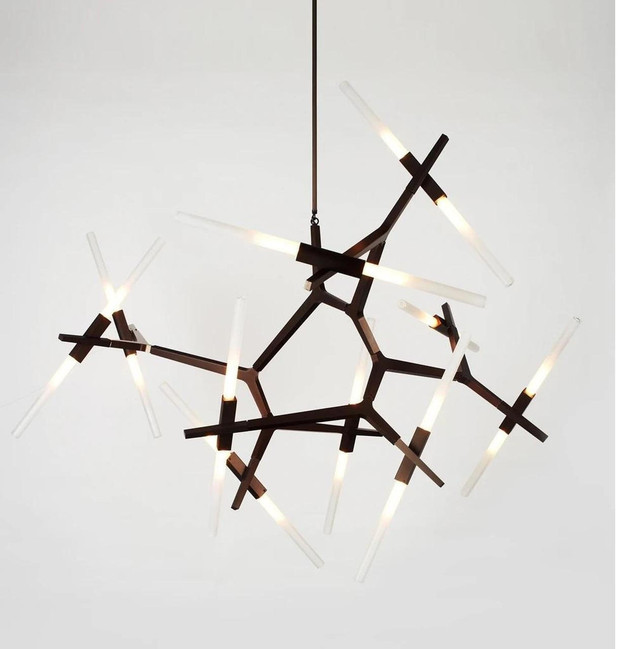

The History, Design, and Lasting Influence of the Lindsey Adelman Agnes Chandelier
The Lindsey Adelman Agnes chandelier is widely regarded as one of the most influential modern lighting designs of the early twenty-first century. With its articulated arms, exposed light sources, and modular construction, the Agnes chandelier marked a clear departure from traditional decorative lighting. Rather than hiding structure and wiring, the design embraces them, transforming functional components into defining visual elements.
Over time, the Agnes chandelier has become a reference point for contemporary lighting design, influencing a wide range of chandeliers, pendant lights, and architectural lighting systems. Its impact extends well beyond a single fixture, shaping how designers and homeowners think about light, form, and space.
The Origins of the Agnes Chandelier
The development of the lindsey adelman agnes chandelier coincided with a broader shift in interior and industrial design. During this period, designers increasingly rejected ornamentation in favour of clarity, honesty of materials, and visible construction. Lighting was no longer expected to blend quietly into the background; instead, it began to play a more expressive, architectural role.
The Agnes chandelier was conceived as a modular system rather than a fixed object. Its branching arms can be arranged in multiple configurations, allowing the fixture to adapt to different room sizes, ceiling heights, and architectural layouts. This approach challenged the traditional notion of a chandelier as a symmetrical, static centrepiece.
By allowing flexibility in scale and form, the Agnes design introduced a new level of customisation into modern lighting, making it equally suitable for residential, commercial, and hospitality interiors.
Design Philosophy and Visual Language
At the heart of the agnes chandelier is a commitment to balance and proportion. The design typically features a central stem or hub from which linear arms extend outward. Light sources are positioned at the ends of these arms, creating a sense of equilibrium even in asymmetrical arrangements.
One of the defining characteristics of the Agnes chandelier is the use of exposed bulbs. Rather than concealing the light source behind shades or diffusers, the design treats the bulb as an integral part of the composition. This decision reinforces the idea that light itself is a material, as important as metal or glass.
Finishes such as brushed brass, blackened steel, and polished nickel allow the Agnes chandelier to complement a wide range of interior styles, from minimalist and mid-century modern to industrial and contemporary spaces.
The Role of the Agnes Pendant Light
While the Agnes chandelier is most commonly associated with multi-arm ceiling fixtures, the same design principles translate seamlessly into pendant lighting. The agnes pendant light distils the core elements of the chandelier into a more compact form, making it suitable for focused lighting applications.
Agnes pendant lights are often used over kitchen islands, dining tables, and counters, where their linear geometry and exposed bulbs provide both functional illumination and visual interest. In these settings, the pendant format allows the design to remain present without overwhelming the space.
The versatility of the agnes pendant lamp has contributed significantly to the broader adoption of the Agnes aesthetic, extending its influence beyond statement chandeliers into everyday architectural lighting.
Why the Agnes Chandelier Became Iconic
The enduring popularity of the lindsey adelman agnes chandelier can be attributed to several key factors. First, its modular construction allows designers to tailor the fixture to the specific proportions of a space. This flexibility is particularly valuable in contemporary interiors, where ceiling heights and room layouts vary widely.
Second, the design achieves a careful balance between technical precision and organic expression. While the structure is clearly engineered, the branching arms introduce a sense of movement that feels dynamic rather than rigid.
Finally, the Agnes chandelier aligns with a growing preference for authenticity in design. By exposing joints, connectors, and light sources, it communicates how it is made, reinforcing trust in both its form and function.
The Agnes Chandelier in Modern Interiors
Today, the Agnes chandelier is frequently specified for dining rooms, living spaces, stairwells, and open-plan interiors. Its linear arms help visually anchor large spaces, while the exposed bulbs provide warm, ambient light.
In commercial and hospitality environments, Agnes-style lighting is often used to create atmosphere without relying on decorative excess. Restaurants, hotels, and retail spaces favour the design for its ability to feel contemporary while remaining timeless.
The continued presence of the agnes chandelier in these settings reflects its adaptability and lasting relevance within modern interior design.
Materials, Technology, and Contemporary Variations
Advances in lighting technology have allowed the Agnes design to evolve alongside changing performance requirements. Modern LED bulbs now offer improved energy efficiency, longer lifespan, and more precise control over colour temperature and brightness.
These developments enable contemporary Agnes chandeliers and pendant lamps to meet current sustainability standards while preserving the visual clarity that defines the design. Manufacturers have also experimented with variations in scale, arm length, and finish, ensuring the Agnes aesthetic remains responsive to new interior trends.
Influence on Contemporary Lighting Design
The influence of the lindsey adelman agnes chandelier can be seen across a wide range of modern lighting products. Many contemporary chandeliers and pendant lights draw inspiration from its modular structure, exposed bulbs, and linear forms.
This influence has contributed to the emergence of a broader category of modern branching and articulated lighting such as the branching bubble chandelier , where fixtures are designed as architectural elements rather than purely decorative objects.
Conclusion
The Agnes chandelier represents a significant moment in the evolution of modern lighting design. Through its modular construction, exposed light sources, and sculptural clarity, it redefined what a chandelier could be. Whether expressed as a full chandelier, an agnes pendant light, or a minimalist pendant lamp, the design continues to shape contemporary interiors.
As architecture and interior design increasingly prioritise flexibility, honesty of materials, and purposeful form, the lindsey adelman agnes chandelier remains a powerful reference point. Its lasting influence confirms its status as one of the most important modern lighting designs of its era.
Frequently Asked Questions About the Agnes Chandelier
What is the Lindsey Adelman Agnes chandelier?
The Lindsey Adelman Agnes chandelier is a modern lighting design defined by articulated metal arms, exposed bulbs, and a modular structure. It is widely recognised for blending industrial elements with refined proportions, creating a sculptural chandelier that functions as both lighting and architectural feature.
Why is the Agnes chandelier so popular in modern interiors?
The Agnes chandelier became popular because it offers flexibility, visual impact, and a minimalist aesthetic. Unlike traditional chandeliers, it can be configured to suit different room sizes and ceiling heights, making it ideal for contemporary open-plan interiors and modern homes.
What rooms suit an Agnes chandelier best?
An Agnes chandelier works particularly well in:
-
Dining rooms
-
Living spaces
-
Open-plan kitchens
-
Stairwells
-
Double-height rooms
Its linear, branching form allows it to anchor a space without overwhelming it, especially in modern interiors with clean architectural lines.
What is an Agnes pendant light?
An Agnes pendant light is a more compact variation of the Agnes chandelier design. It uses the same exposed structure and minimalist aesthetic but in a pendant format, making it suitable for kitchen islands, dining tables, and counters where focused lighting is required.
Is an Agnes pendant lamp suitable for kitchens?
Yes. An Agnes pendant lamp is commonly used in kitchens, particularly over islands and breakfast bars. Its exposed bulb design provides functional illumination while maintaining a sculptural, modern appearance that complements contemporary kitchen layouts.
What finishes are common on Agnes-style chandeliers?
Agnes-style chandeliers are typically finished in materials such as:
-
Brushed brass
-
Blackened metal
-
Polished or satin nickel
These finishes help the chandelier integrate easily into a wide range of interior styles, from minimalist to industrial-inspired spaces.
Are Agnes chandeliers modular?
Yes. One of the defining features of the Agnes chandelier is its modular construction. The arms can be arranged in different configurations, allowing the fixture to adapt to various room sizes and layouts while maintaining its distinctive design language.
What type of bulbs are used in Agnes chandeliers?
Agnes chandeliers usually feature exposed bulbs, often LED-compatible. Modern LED bulbs provide warm light, energy efficiency, and long lifespan while preserving the clean, sculptural look that defines the design.
How does an Agnes chandelier differ from a traditional chandelier?
Unlike traditional chandeliers, which rely on ornamentation and symmetry, the Agnes chandelier focuses on structure, balance, and exposed components. This results in a lighter, more architectural appearance that aligns with contemporary interior design rather than classical décor.
Is the Agnes chandelier a good long-term design choice?
Yes. The Agnes chandelier is considered a strong long-term design choice because it prioritises proportion, material quality, and flexibility rather than short-lived decorative trends. Its minimalist form allows it to remain relevant as interior styles evolve.